

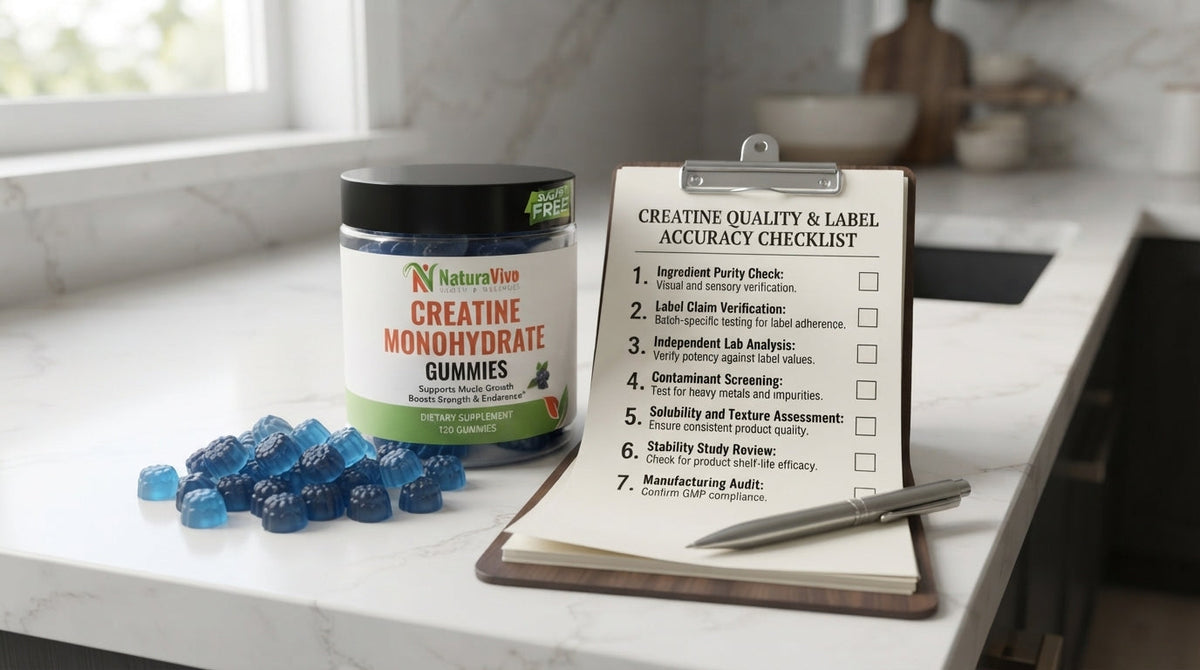
Short answer: creatine gummies can work. Creatine itself is the most researched sports supplement there is, and your muscles don't care whether it arrives as a gummy or a powder. But independent lab tests have found that some gummies on the market contain far less creatine than their labels say. So a gummy works only if it really delivers a full daily dose. Here's what the tests found, why it happens, and a checklist for judging any gummy.
What creatine needs to do its job
Creatine works by filling your muscles' creatine stores over days and weeks. That takes about 3–5 g a day, every day (ISSN position stand). Get that dose and the format doesn't matter much. Fall well short of it and you won't get the benefits, however many gummies you eat.
For what those benefits are, see Creatine Monohydrate Benefits.
What the lab tests found
In 2025, two sets of independent tests put creatine gummies under the microscope:
- SuppCo tested six popular creatine gummies. Four contained almost no creatine, and two had none detectable. The creatine powders tested alongside them passed (SuppCo).
- NOW Foods tested 12 gummy brands and found 5 severely understrength (SupplySide).
Some brands passed both rounds. So the lesson isn't "gummies don't work". It's that you can't judge a gummy by its front label.
Why some gummies come up short
Creatine is sensitive to heat and moisture, and making gummies involves both. Under those conditions, creatine can slowly convert into creatinine, a waste product with no performance benefit. That's why a gummy can start with the right amount of creatine in the recipe and still end up with less by the time it's eaten. The testers found creatinine in many of the failing products, consistent with this breakdown.
Two other problems show up on labels:
- Tiny doses per gummy. Some products contain 0.5 g or less per gummy, so a real dose takes a handful every day.
- Hidden amounts. Creatine listed inside a "proprietary blend" with no milligram amount, so you can't tell how much you're getting.
A 7-point checklist for any creatine gummy
- The creatine amount is stated. The Supplement Facts panel should show milligrams of creatine per serving, and ideally per gummy.
- A full serving reaches 3–5 g. If a serving gives 1–2 g, you're underdosing unless you take more servings.
- The gummy count is reasonable. Divide 5,000 mg by the creatine per gummy. If the answer is 8 or more, you're unlikely to stick with it. Our gummy dosing guide has a table.
- The form is creatine monohydrate. It's the form used in the research. Others haven't been shown to work better.
- Everything else is listed. Check sugar, sweeteners, and added ingredients so you know what you're taking every day.
- Freshness is clear. Look for an expiration date, and store gummies somewhere cool and dry with the lid closed. Heat speeds up breakdown.
- Independent testing. Third-party testing that measures creatine in the finished gummy gives the most confidence. Many brands, including large ones, don't publish this yet, so it's worth asking a brand directly.
About NaturaVivo Creatine Gummies
Here's how our Creatine Monohydrate Gummies line up against the checklist, based on their label:
- Dose: 5,000 mg of creatine monohydrate per serving of 4 gummies.
- Supply: 120 gummies, 30 servings.
- Formula: sugar-free, vegan, non-GMO, and gluten-free, with no artificial colors or flavors.
Prefer the most cost-effective, easiest-to-check option? Our Creatine Monohydrate Powder gives 5 g per scoop. See Creatine Gummies vs Powder for a side-by-side comparison.
Gummy or powder: which should you choose?
Powder is the cheapest per gram, the easiest to dose precisely, and the format with the longest research record. The 2025 tests also found powders far more reliable.
Gummies make sense if convenience is what keeps you consistent: you travel, you dislike mixing powder, or you keep forgetting to take it. The best creatine is the one you take every day, so for some people a gummy that passes the checklist is the better choice in practice.
How to tell if your creatine is working
You won't feel creatine kick in like caffeine. After 3–4 weeks of daily use, look for:
- An extra rep or two at the same weight
- Better performance on repeated sprints or intervals
- Slightly fuller-looking muscles
- A small early gain on the scale (about 0.5–1 kg, or 1–2 lb) from water stored in muscle
If you've taken a full daily dose for more than a month and noticed none of these while training regularly, check your gummy's label against the checklist, or consider switching to powder.
Frequently asked questions
Are creatine gummies a scam?
Not as a category. Some products tested well, and some failed badly. Judge each product by its label and the checklist above, not by the format.
Do creatine gummies work as well as powder?
At the same real dose, they should. No study has compared the two head-to-head yet, but creatine works the same way regardless of format once it's absorbed.
Why do creatine gummies cost more?
They need pectin, flavor, sweetener, and more packaging, and they're harder to make. Expect to pay more per gram than for powder.
How should I store creatine gummies?
Keep them sealed in a cool, dry place, away from heat and humidity. Don't leave them in a hot car or a steamy bathroom.
Do creatine gummies cause bloating or hair loss?
No more than powder at the same dose. A 2025 trial found no effect on hair at 5 g a day. See Does Creatine Cause Hair Loss or Bloating?
The bottom line
Creatine gummies work when they deliver a real 3–5 g of creatine monohydrate a day. Independent tests show that isn't true of every product, so read the label, run through the checklist, and store them well. If you want the simplest, best-proven option, powder is hard to beat. If convenience keeps you consistent, a well-labeled gummy is a good choice.
These statements have not been evaluated by the Food and Drug Administration. This product is not intended to diagnose, treat, cure, or prevent any disease. This article is for general information and isn't medical advice. Talk to your healthcare provider before starting any supplement, especially if you have a medical condition or take medication.